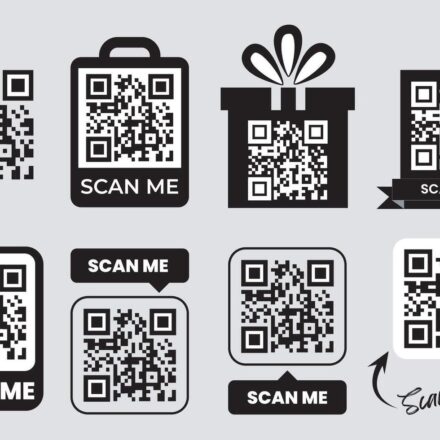
QR Codes Explained: Why They Have Three Corner Squares and How They Work

A Symbol of the Digital Age
The humble QR code—with its distinctive matrix of black and white squares—has become an instantly recognizable symbol of the digital age. A quick scan lets you pay for products, board a train, open a door, pull up a restaurant menu, and perform a myriad of other everyday tasks. Despite each QR code encoding unique data, they all share one identical feature: three large squares positioned in three of the four corners.
But why only three corners? What do these squares actually do? And how can a tiny pattern of squares hold so much information?
This article explores the clever engineering behind QR codes, from their invention in 1994 to the ingenious 1:1:3:1:1 ratio that makes them globally scannable—regardless of orientation or surrounding clutter.
What Are QR Codes and Why Are They Everywhere?
| Aspect | Description |
|---|---|
| Full Name | Quick Response Code |
| Invented | 1994 by Denso Wave (a Toyota subsidiary) |
| Inventor | Masahiro Hara and his team |
| Original Use | Tracking automotive parts in factories |
| Current Use | Payments, tickets, menus, marketing, access control |
| Key Advantage | Holds more data than traditional barcodes and can be scanned from any angle |
QR codes were designed as a more robust, higher-capacity alternative to traditional barcodes. While barcodes store data only horizontally, QR codes store information in two dimensions—both horizontally and vertically—allowing them to hold significantly more data in a smaller space.
The Anatomy of a QR Code: More Than Meets the Eye
At first glance, a QR code looks like random noise. But it’s actually a carefully structured system with several key components:
| Component | Function |
|---|---|
| Finder Patterns | Three large squares in the corners (top-left, top-right, bottom-left) that help scanners detect and orient the code. |
| Alignment Patterns | Smaller squares that help correct distortion when scanning from an angle. |
| Timing Patterns | Alternating black and white lines that provide grid reference. |
| Format Information | Contains error correction level and mask pattern data. |
| Data and Error Correction | The actual encoded content plus redundancy to recover from damage. |
| Quiet Zone | The white margin around the code that separates it from surrounding content. |
The Finder Patterns: Why Three Corners and Not Four?
The three large squares—formally called finder patterns—are positioned in the top-left, top-right, and bottom-left corners. The bottom-right corner is deliberately left empty.
Why Only Three?
The three-corner design allows any scanning device to determine the QR code’s orientation instantly:
| Corner Position | Purpose |
|---|---|
| Top-Left | Anchor point; tells the scanner where the code begins. |
| Top-Right | Defines the horizontal axis and width. |
| Bottom-Left | Defines the vertical axis and height. |
| Bottom-Right (Empty) | Confirms orientation; the scanner knows that the missing corner is the bottom-right. |
The Clever Result: You can scan a QR code from any angle—upright, sideways, or even upside down—and the reader will automatically correct the orientation. Test it yourself next time: scan a QR code with your phone held sideways. The reader will have no trouble recognizing and decoding it.
The All-Important 1:1:3:1:1 Ratio
Creating the finder pattern was a significant engineering challenge. It had to be unique enough to avoid being confused with ordinary printed content—text, logos, or other graphics that might surround the code.
The Challenge
The development team, led by Masahiro Hara, analyzed a wide array of printed materials—magazines, books, packaging, and advertisements. They discovered that a specific ratio of white to black areas almost never occurred naturally in everyday print:
The Magic Ratio: 1 : 1 : 3 : 1 : 1
How It Works
| Component | Width | Description |
|---|---|---|
| White Space | 1 unit | Outer border |
| Black Bar | 1 unit | First black line |
| White Space | 3 units | Wide white band (distinctive) |
| Black Bar | 1 unit | Second black line |
| White Space | 1 unit | Outer border |
This 1:1:3:1:1 pattern rarely appears in regular text, advertisements, or graphics. By embedding this unique ratio into the finder pattern, QR code scanners can:
-
Lock onto the code regardless of surrounding text and images.
-
Distinguish the QR code from background clutter.
-
Scan quickly and reliably from virtually any angle.
Historical Note: The idea for QR codes came from the popular board game Go. The game’s black and white stones inspired the contrast and arrangement that would eventually become the QR code’s visual language.
The Evolution of QR Codes
| Era | Milestone |
|---|---|
| 1994 | QR code invented by Denso Wave for automotive parts tracking. |
| Late 1990s | QR codes begin spreading, mainly within industrial settings. |
| Early 2000s | Camera-equipped mobile phones enable public use for accessing information. |
| 2010s | Smartphone proliferation drives widespread adoption across marketing, payments, and logistics. |
| 2020s | QR codes become essential for contactless payments, digital menus, and COVID-19 tracing. |
Today, it’s almost impossible to go through an entire day without encountering at least one QR code—though you should always think twice before scanning unknown codes for security reasons.
Tips for Scanning QR Codes Safely
| Tip | Why It Matters |
|---|---|
| Check the URL before tapping | Some QR codes may redirect to malicious websites. Preview the URL on your phone. |
| Avoid scanning unknown QR codes | Stickers or codes in public places could be tampered with. |
| Use built-in camera scanners | Most modern phones have built-in QR scanners that are secure. |
| Keep your phone updated | Security patches help protect against QR-based exploits. |
| Be cautious with payment QR codes | Verify the amount and recipient before confirming any payment. |
Frequently Asked Questions
Why are there only three corner squares in a QR code?
The three squares—top-left, top-right, and bottom-left—allow the scanner to determine the code’s orientation. The bottom-right corner is intentionally empty to confirm which way is “up.”
What is the 1:1:3:1:1 ratio in QR codes?
It’s the specific white-to-black ratio used in the finder patterns. This ratio rarely occurs in ordinary printed materials, making it easy for scanners to lock onto the code.
Who invented the QR code?
The QR code was invented in 1994 by Masahiro Hara and his team at Denso Wave, a Japanese automotive components manufacturer.
Can a QR code be scanned upside down?
Yes! Because of the three-corner finder pattern, the scanner can detect orientation and decode the QR code from any angle—upright, sideways, or upside down.
Why are QR codes better than traditional barcodes?
QR codes store data in two dimensions (horizontally and vertically), allowing them to hold significantly more information in a smaller space. They are also easier to scan from any angle.
Quick Reference Summary
| Feature | Description |
|---|---|
| Finder Patterns | Three large squares at top-left, top-right, and bottom-left. |
| Missing Corner | Bottom-right (confirms orientation). |
| Key Ratio | 1:1:3:1:1 (white-to-black bands). |
| Inventor | Masahiro Hara (Denso Wave, 1994). |
| Inspiration | The board game Go (black and white stones). |
| Original Use | Automotive parts tracking. |
| Current Use | Payments, menus, marketing, access control, and more. |
Final Thoughts: A Design That Changed the World
The QR code is a masterpiece of thoughtful engineering. Its clever use of three-corner finder patterns and the distinctive 1:1:3:1:1 ratio ensures rapid, reliable scanning from any angle, in any environment. From tracking car parts in a Japanese factory to enabling contactless payments in a global pandemic, this humble matrix of squares has become one of the most important inventions of the digital age.
Next time you scan a QR code, take a moment to appreciate the elegant design—those three squares aren’t just random shapes; they’re the key to a global standard that connects the physical and digital worlds.