

Do Video Doorbells Really Prevent Crime? What Studies Reveal
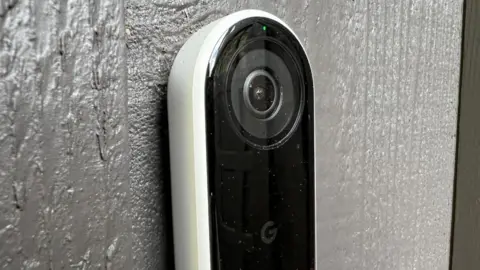
Video doorbells have become increasingly popular among homeowners who want to monitor their front doors, record visitors, and receive alerts when someone approaches their property. Devices such as Ring promise an additional layer of security and may provide valuable footage when suspicious activity or a crime occurs.
However, the question is whether video doorbells actually prevent crime or simply make homeowners feel safer.
Some research suggests that the relationship between security cameras and crime prevention is more complicated than manufacturers’ marketing claims might suggest. In one multi-month study conducted in West Valley, Utah, homes equipped with Ring cameras were reportedly more likely to experience burglaries than homes without them.
At first, this finding may appear surprising. After all, a visible security camera should theoretically discourage criminals. But researchers point out that security technology can also signal that a property has valuable possessions or that the homeowner has enough disposable income to invest in additional security equipment.
Do Security Cameras Actually Reduce Crime?
The effectiveness of surveillance cameras depends heavily on how they are used.
A 2019 study conducted by researchers at City University of New York examined decades of data to evaluate the relationship between CCTV systems and crime prevention. The research suggested that actively monitored surveillance systems were more effective at reducing crime than systems that simply recorded video.
This distinction is important.
A camera that is actively monitored can potentially allow security personnel or law enforcement to intervene while a crime is happening. A camera that simply stores recordings, on the other hand, may only provide evidence after an incident has already occurred.
For example, a surveillance operator who notices someone attempting to break into a building can alert authorities immediately. By comparison, identifying a masked person from a doorbell recording after a package theft can be considerably more difficult.
This raises questions about how much protection a typical consumer video doorbell can actually provide.
The Difference Between Crime Prevention and Crime Evidence
One of the biggest misconceptions about video doorbells is that recording a crime is the same as preventing it.
A doorbell camera can be extremely useful for documenting activity around a property. It may capture images of package thieves, trespassers, suspicious vehicles, or other incidents.
However, recording an incident does not necessarily stop it from happening.
The effectiveness of the footage can also depend on factors such as:
- Camera placement
- Video resolution
- Lighting conditions
- The distance between the camera and subject
- Whether the person’s face is visible
- Whether the footage can be accessed quickly
- Whether someone is actively monitoring the camera
A poorly positioned camera may produce footage that is difficult to use, particularly if the individual is wearing a mask or avoiding the camera.
Video Doorbells and the Illusion of Security
Beyond their ability to record incidents, video doorbells can influence how people perceive safety.
The increased popularity of neighborhood surveillance platforms has also created new ways for residents to discuss suspicious activity.
Ring’s Neighbors platform, for example, experienced a significant increase in activity during its early years. A growing number of posts focused on people described as “strange” or “suspicious,” even when no actual crime had occurred.
This creates an interesting psychological effect: the more information people receive about suspicious activity in their immediate surroundings, the more dangerous their neighborhood may begin to feel.
Can Security Apps Increase Anxiety?
Security technology is designed to make people feel safer, but constant exposure to reports of suspicious behavior can have the opposite effect.
Traditional news reports generally focus on significant incidents. Neighborhood surveillance applications can provide a continuous stream of relatively minor events happening nearby.
A person might open the app to check whether anything unusual has happened and instead encounter multiple reports about strangers, unfamiliar vehicles, package theft, or other suspicious behavior.
Even when these incidents do not represent actual crimes, repeated exposure can reinforce the perception that danger is everywhere.
This is particularly relevant because people often consume crime-related content in an attempt to understand potential risks and protect themselves. Constantly monitoring neighborhood alerts, however, can potentially turn normal activity into something that appears threatening.
The Risk of Misidentifying Suspicious People
Another concern surrounding neighborhood surveillance platforms is the possibility of innocent people being incorrectly identified as suspicious.
A person walking through a neighborhood may look unfamiliar simply because they do not live there. A delivery driver, contractor, visitor, or passerby can easily become the subject of a neighborhood post without having committed a crime.
Research has also raised concerns about racial bias in descriptions of people posted on neighborhood surveillance platforms. Certain racial identifiers have appeared frequently in reports describing people as suspicious, raising concerns about how surveillance technology can reinforce existing biases.
The problem becomes more serious when online accusations lead to confrontations in the real world.
There have been reported incidents involving armed confrontations connected to suspicions generated through neighborhood surveillance networks. These cases demonstrate why homeowners should be cautious about treating an unfamiliar person on camera as evidence of criminal activity.
When Can a Video Doorbell Be Useful?
None of this means that video doorbells are useless.
A properly installed doorbell camera can provide several practical benefits. It can allow homeowners to see who is at the door without opening it, monitor deliveries, document property damage, and collect evidence when an incident occurs.
Modern devices can also provide motion alerts and remote access, allowing users to check their property while they are away.
The important distinction is between using a camera as a security tool and assuming that the camera alone will prevent crime.
A video doorbell works best as one component of a broader home security strategy.
How to Make a Video Doorbell More Effective
Homeowners who decide to install a video doorbell can improve its usefulness by paying attention to how it is configured.
Consider the following:
- Position the camera so the face and body of visitors are clearly visible.
- Avoid pointing the camera directly toward strong sources of light.
- Make sure the device has a reliable internet connection.
- Keep the camera’s software and firmware updated.
- Use strong account security and enable two-factor authentication when available.
- Consider local-storage options if you want greater control over recordings.
- Combine the doorbell with outdoor lighting and other security measures.
- Avoid publicly accusing people based solely on unclear camera footage.
These steps can help turn a doorbell camera into a useful monitoring device without creating a false sense of complete protection.
Do Video Doorbells Make Homes Safer?
The answer is not as simple as a yes or no.
Video doorbells can provide useful evidence and improve awareness around a property, but the available research does not establish that simply installing a consumer doorbell camera will automatically reduce crime.
Active surveillance appears to offer different benefits from passive recording, and the effectiveness of any camera depends heavily on how it is installed, monitored, and used.
There is also a potential downside when surveillance technology causes residents to interpret ordinary activity as suspicious or encourages them to constantly monitor neighborhood crime reports.
Final Thoughts
A video doorbell can be a valuable home security device, but it should not be viewed as a guaranteed crime-prevention solution.
Cameras can document incidents, provide alerts, and sometimes help authorities investigate crimes. However, recording an event is different from preventing it, and passive surveillance may not offer the same protection as an actively monitored security system.
Homeowners should therefore approach claims about crime reduction with caution. A video doorbell is best treated as one part of a larger security strategy rather than a standalone solution.
Ultimately, good camera placement, responsible use of recorded footage, strong account security, outdoor lighting, and sensible security practices can make a video doorbell considerably more useful while reducing the risk of turning everyday neighborhood activity into a source of unnecessary fear.


