The 4,000-Volt Lightsaber Bug Zapper That Turns Pest Control Into a Galactic Experience
Introduction: Pest Control Meets a Galaxy Far, Far Away
Bug zappers haven’t exactly had a design renaissance. For decades, they’ve existed in more or less the same form—somewhere between forgettable and mildly unpleasant to look at. Most of them get tucked into corners or mounted out of sight, precisely where most people prefer them. They do the job, roughly speaking, but nobody has ever been genuinely excited to reach for one.
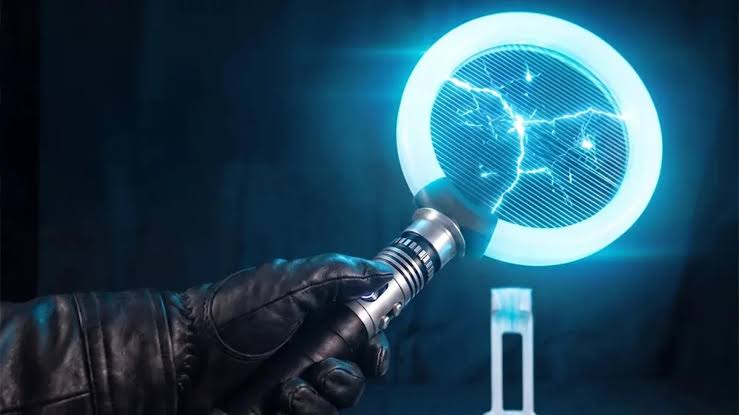
Brightbeam Solutions seems to have taken that as a challenge. Enter the Bug Saber—a modular, lightsaber-inspired bug zapper that transforms a routine annoyance into something interactive, engaging, and surprisingly satisfying. With a 4,000-volt zapping grid, full-motion sound effects, and a bright LED ring, this is pest control reimagined for the 21st century.
Meet the Creator: From NASA to Pest Control
The Bug Saber is the brainchild of Jonathan Barraclough, a former Air Force officer, NASA engineer, and now product designer. Barraclough turned to Kickstarter to fund the project, bringing his unique blend of engineering expertise and creative vision to the world of pest control.
| Background | Details |
|---|---|
| Previous Roles | U.S. Air Force Officer, NASA Engineer |
| Current Role | Product Designer at Brightbeam Solutions |
| Funding Platform | Kickstarter |
| Project Goal | $10,000 (all-or-nothing funding) |
How Does the Bug Saber Actually Work?
The Bug Saber is built around three core components: the Bug Saber Head (which houses the zapping grid and LED ring), a compatible hilt, and a vertical stand.
The Anatomy of the Bug Saber
| Component | Function |
|---|---|
| Bug Saber Head | Houses the 4,000-volt zapping grid and bright LED ring. |
| Hilt | Lightsaber-style handle; can be swapped with compatible third-party hilts. |
| Vertical Stand | Allows hands-free, stationary operation indoors or outdoors. |
Step-by-Step Operation
-
Activate: Switch on the Bug Saber. The LED ring glows, and saber-style sound effects kick in.
-
Attract: Insects are naturally drawn to the bright light, much like a traditional bug zapper.
-
Zap: When an insect flies into the 4,000-volt high-voltage grid, it is vaporized instantly.
-
Satisfy: The combination of light, sound, and immediate result makes each instance feel surprisingly satisfying.
Versatile Use Cases
| Configuration | Best For |
|---|---|
| Handheld | Active pest control—swatting flies, mosquitoes, and other flying insects. |
| Mounted on Stand | Passive pest control—backyard, patio, campsite, or even indoors. |
No Cleanup Required: Barraclough’s demo video shows that zapped bugs leave no residue behind—no cleanup afterward.
Pricing and Availability
The Bug Saber is currently available for pre-order on Kickstarter, with early-bird pricing starting at $24 for the head alone.
Shipping Timeline: First shipments are expected in December 2026, assuming the Kickstarter campaign reaches its funding goal.
Funding Status: The project has a $10,000 goal and operates on an all-or-nothing basis—if it doesn’t reach the goal by the deadline, no funds are collected.
Why the Bug Saber Is Going Viral
1. It Fills a Design Void
Bug zappers have never been objects of desire. They’re functional but forgettable. The Bug Saber changes that by borrowing from sci-fi gadget culture rather than home appliance conventions. It doesn’t look like anything from a hardware store—and that’s entirely the point.
2. It’s Modular
If you already own a compatible saber-style hilt (the kind used in cosplay or collecting communities), you can swap in the Bug Saber Head directly, converting your existing setup into a functional bug-control device.
3. It’s Satisfying
The glow, the sound, and the instant result work together to create something that feels rewarding rather than routine. As one reviewer put it: “You pick it up the first time because there’s a fly in the room. The second time, you reach for it a little more quickly than strictly necessary.”
A Note for Star Wars Fans
At the risk of stating the obvious: no, this could never come close to an actual lightsaber. Fans know Star Wars lightsabers are more than just weapons, and there’s a ton of lore behind their (fictional) existence and design that’s deeply fascinating.
But we can let Barraclough have this one. It’s still pretty darn neat after all.
Frequently Asked Questions
What voltage does the Bug Saber use?
The Bug Saber features a 4,000-volt high-voltage zapping grid.
Is there any cleanup after zapping a bug?
No. According to Brightbeam Solutions, the bugs are vaporized on contact, leaving no residue behind.
Can I use it indoors?
Yes. The Bug Saber can be used both indoors and outdoors, either handheld or mounted on its vertical stand.
Do I need to buy the full set?
No. If you already own a compatible lightsaber-style hilt, you can purchase just the Bug Saber Head for $24 and attach it to your existing hilt.
When will the Bug Saber ship?
First shipments are expected in December 2026, assuming the Kickstarter campaign is successfully funded.
Quick Reference Summary
| Aspect | Details |
|---|---|
| Product | Bug Saber |
| Creator | Jonathan Barraclough (Brightbeam Solutions) |
| Voltage | 4,000 volts |
| Features | LED ring, lightsaber sound effects, modular design |
| Use Cases | Handheld or mounted on stand |
| Price | From $24 (head only) to $69+ (full set) |
| Availability | Kickstarter pre-order |
| Shipping | Expected December 2026 |
Final Thoughts: Pest Control, Reimagined
The Bug Saber is more than just a novelty—it’s a genuine rethinking of what a bug zapper can be. By combining the satisfying aesthetics of a lightsaber with the practical functionality of a high-voltage zapper, Brightbeam Solutions has created something that’s both fun and functional.
Whether you’re a Star Wars fan, a backyard enthusiast, or just someone tired of swatting flies, the Bug Saber offers a unique approach to pest control that’s unlike anything else available today.
Ready to zap some bugs in style? Head over to Kickstarter and secure your early-bird pre-order before they’re gone.